

Libya's Resilient Rhythms: Investment Opportunities in a Nation Reawakening
African Music Investment Newsletter Issue 64: October 2025

Libya, a nation at the crossroads of North Africa and the Mediterranean, presents a unique and complex investment landscape. Its music industry, deeply rooted in a rich tapestry of Arab-Berber, Tuareg, and Mediterranean traditions, is navigating a period of profound political and social change. Despite the challenges of instability and a recent cultural clampdown, Libya’s young, digitally-connected population and rich cultural heritage offer compelling opportunities for investors with a long-term vision and an appetite for impact-driven ventures. This newsletter explores the investment landscape in Libya’s evolving music industry, highlighting opportunities that leverage the country’s cultural depth, strategic location, and the resilience of its creative spirit.
Featured Country: Libya
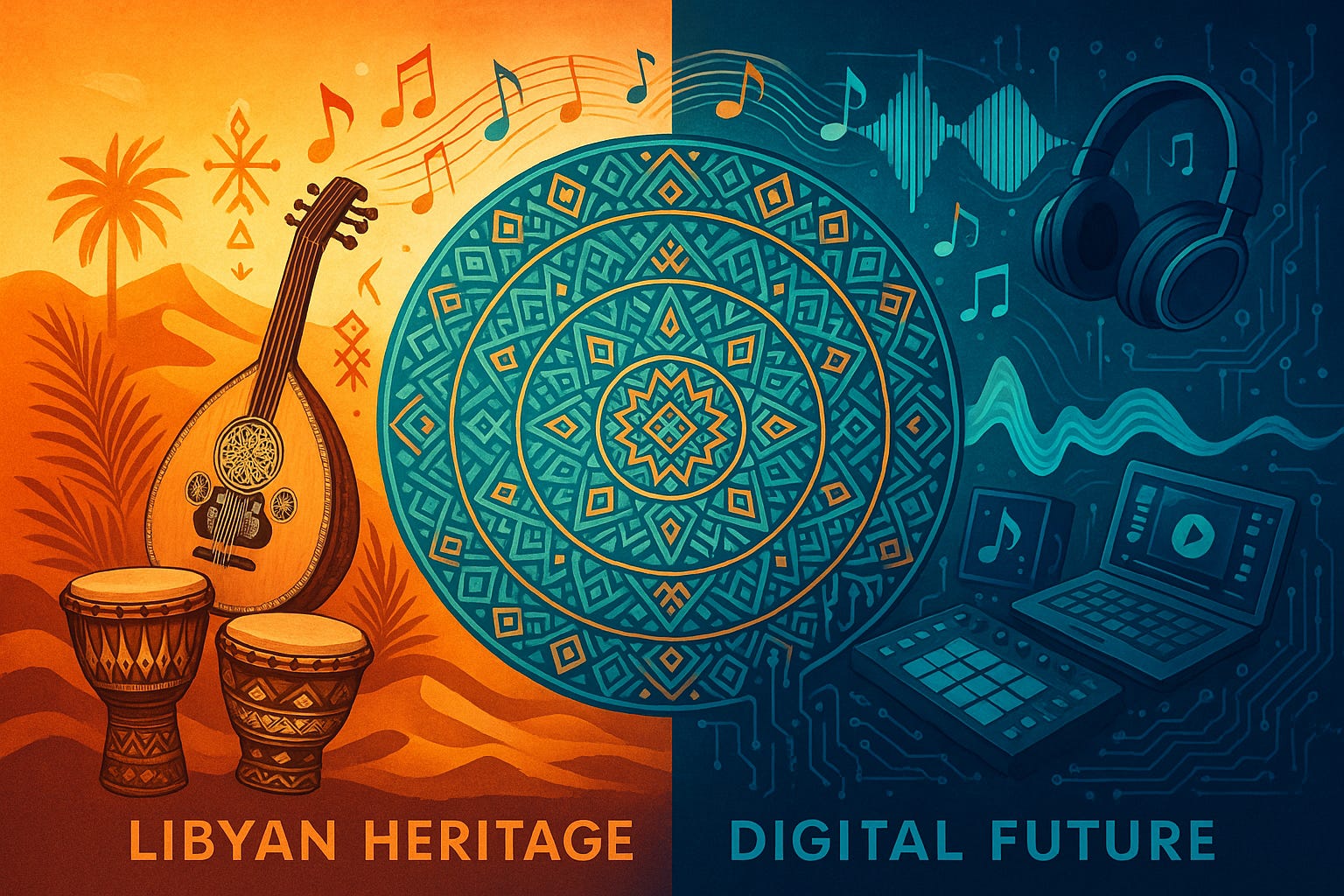
Libya’s music scene is a vibrant mosaic of traditional and contemporary sounds. The country’s musical heritage encompasses the Andalusian classical music of Malouf, the desert blues of the Tuareg, and a variety of Arab and Amazigh folk traditions [1]. In recent years, a burgeoning youth culture has embraced global genres like hip-hop and electronic music, creating a dynamic fusion of old and new. This cultural diversity provides multiple entry points for strategic investment across various segments of the music value chain.
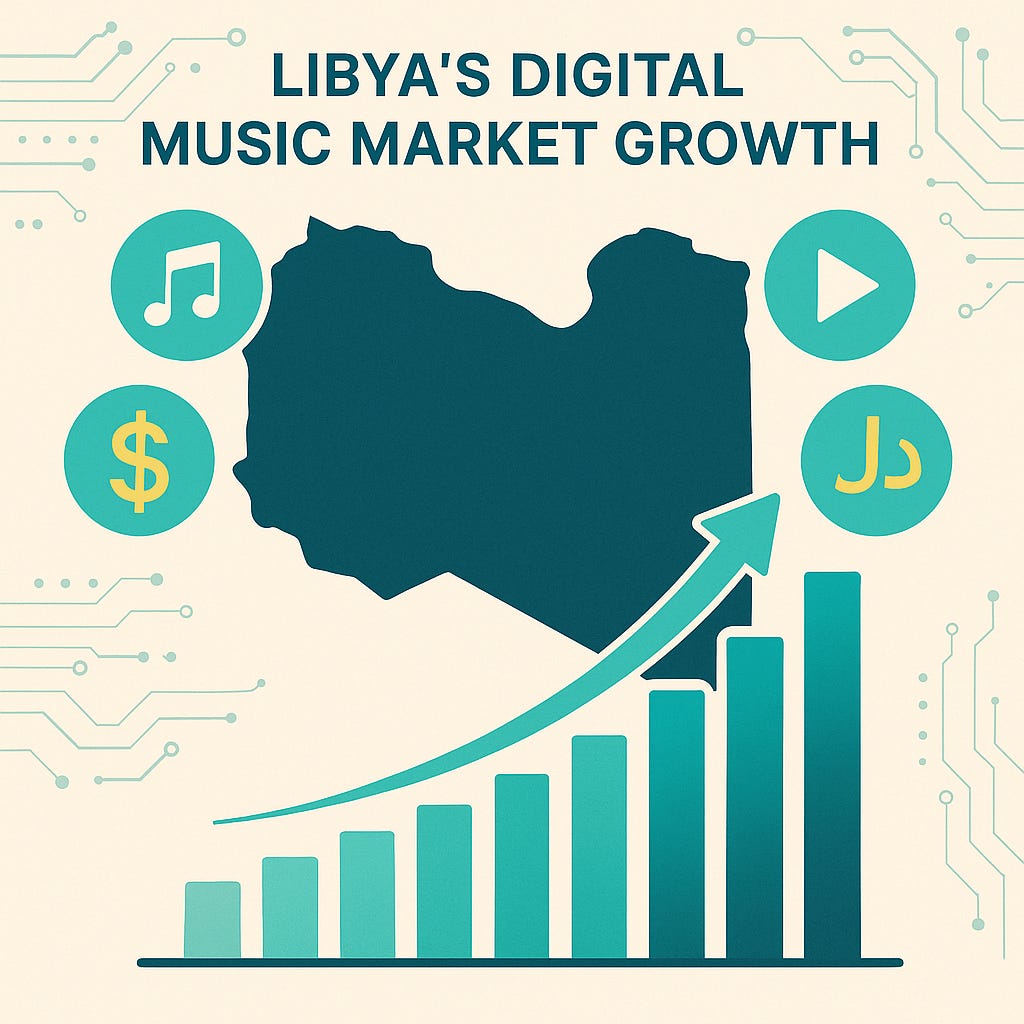
The Libyan music industry benefits from several key factors: a young and growing population of 7.5 million with a strong sense of cultural identity, and rapidly expanding digital infrastructure. As of early 2025, Libya has an internet penetration rate of 88.5%, with 6.57 million users and 14.6 million mobile connections [2]. Social media platforms like Facebook, Instagram, and TikTok are not only primary channels for music consumption and discovery but also vital tools for artists to connect with a domestic and global audience.
However, the path forward is not without significant obstacles. The country remains politically fragmented, with two rival administrations in the east and west. In February 2025, both authorities imposed a clampdown on rap music, citing violations of “moral rules,” and requiring artists to obtain government permission for performances [3]. This move has cast a chill over the burgeoning rap scene, which had been a powerful voice for social commentary and a reflection of the country’s turbulent recent history.
Despite these challenges, the resilience of Libyan artists and the power of digital distribution continue to drive the music scene forward. Artists like Amaka Jaji, a musician and photographer who blends electronic Touareg music with traditional elements, are gaining international recognition [4]. The availability of global streaming platforms like Spotify, which launched in Libya in 2021, and the thriving MENA music market—the world’s fastest-growing—provide new avenues for Libyan artists to reach a wider audience and monetize their work [5].
Music Investment Trends & Opportunities
The Libyan music landscape, though challenging, offers several unique investment opportunities that capitalize on the nation’s rich cultural heritage and the ingenuity of its creative sector:
Diaspora Market & Digital Content Creation: Libya’s significant diaspora in Europe, North America, and neighboring countries represents a primary audience and a vital economic lifeline. Investment in digital platforms that connect Libyan artists with this global community can bypass domestic distribution hurdles and create sustainable revenue streams. This includes supporting digital storytelling, online music education, and virtual cultural experiences.
Cultural Heritage & Modern Fusion: Libya’s diverse musical traditions, from the classical Malouf to the Tuareg’s desert blues, provide a deep well of inspiration for contemporary artists. Investment in projects that fuse these traditional sounds with modern genres like electronic music and hip-hop can create a unique artistic identity with both local and international appeal. This can include funding for recording projects, collaborations between traditional and contemporary artists, and the development of digital archives of traditional music.
Youth-Driven Creative Hubs & Education: With a large and digitally-savvy youth population facing high unemployment, there is a significant opportunity to invest in creative education and training. This includes establishing creative hubs, music production workshops, and digital media training centers that can empower the next generation of Libyan artists and creative entrepreneurs.
Live Music & Cultural Festivals (Long-Term): While the current security and political situation makes large-scale events challenging, there is long-term potential for investment in live music venues and cultural festivals, particularly in more stable regions. The success of the 2024 Benghazi Summer Festival, before the recent restrictions, demonstrates a strong public appetite for live music and cultural events.
Music for Film, Gaming, and Media: As Libya’s media landscape develops, there will be a growing demand for original music for films, television, and video games. Investment in music production houses and sync licensing agencies can position investors to capitalize on this emerging market.
